


G-Land Surf Guide: Breaking Down the Sections, Waves and Seasons

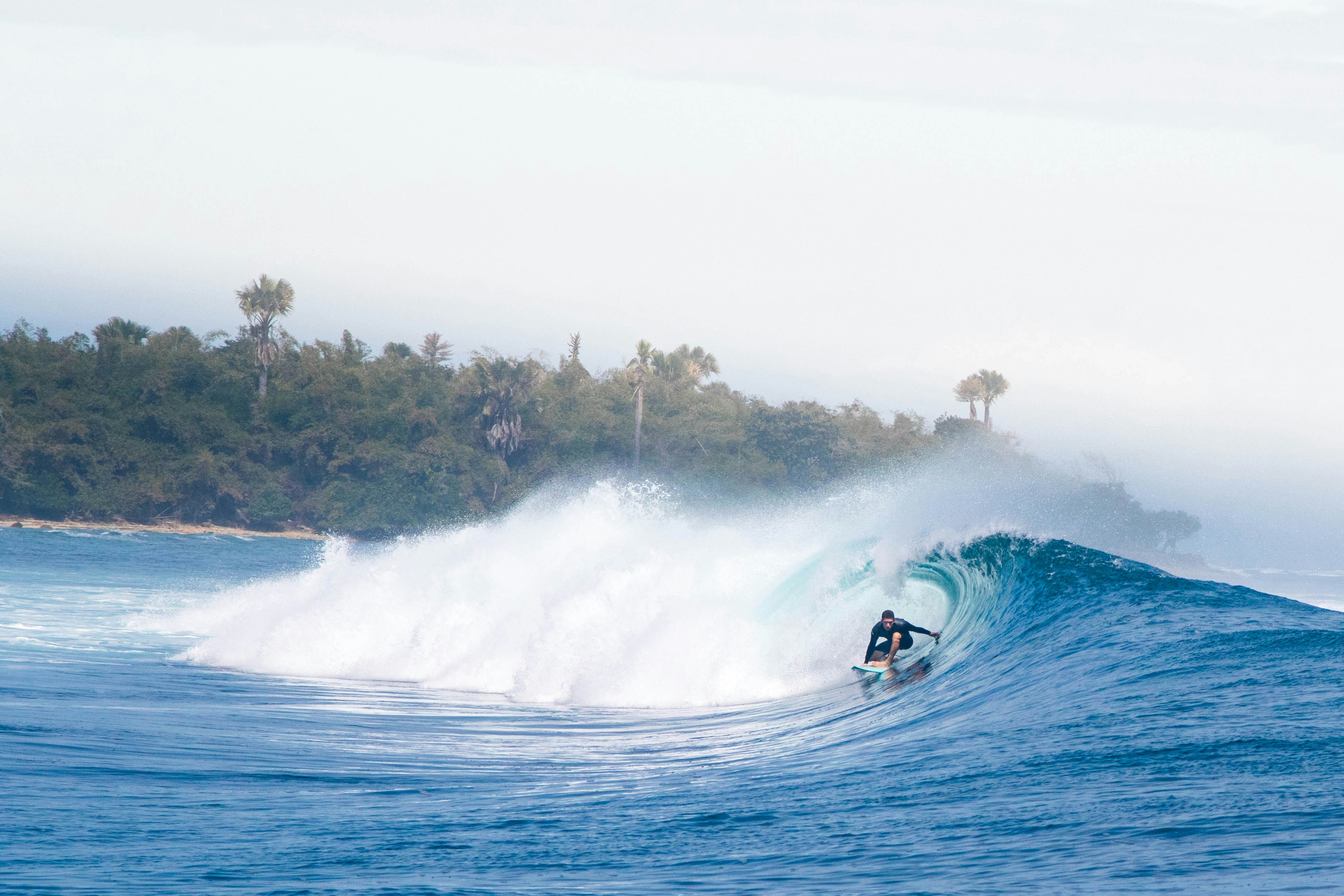
G-Land is pretty legendary amongst surfers.
It's over a kilometre of rideable reef with barrels that just won't quit!
But strip away the legend and there's a real wave here with real moving parts. Five named sections strung along one point of Javanese coast, and a few softer waves in the bay that aren't G-Land at all, whatever the internet tells you. Tides that change everything. Turn up on the wrong section at the wrong tide and you'll spend the session watching other people go.
So here's the honest breakdown from your friends at Kala. What breaks where, when it works and what it actually takes to surf it. We'll be straight with you the whole way, because this isn't a wave you turn up to and wing. It requires a little planning. Get it right and it's the wave of your life. Get it wrong and you'll spend dinner hearing about your mate's.
Where is G-Land, and why the wave works
G-Land sits in Grajagan Bay on the far southeast tip of Java, tucked inside the wild Alas Purwo jungle. The beach itself is called Plengkung. G-Land is what surfers call it, and the two names get used interchangeably once you're there. You're about as far east as Java goes, and the strait that splits it from Bali is just around the corner to the north.
The magic comes from geography. There's a 10,000 foot drop off sitting just offshore. Swells come up out of that deep water with nothing between them and Western Australia, then slam into a shelf of coral angled perfectly into the southwest.
Add offshore southeast trades and you get long, peeling, hollow lefts that have graced surf mags around the world. The trades usually fill in mid-morning, which is why nobody at G-Land is in a hurry at breakfast. When all three line up, few waves on earth come close.
Breaking down the G-Land surf breaks
The point breaks in a sequence, but the sections rarely link. A kilometre of reef doesn't mean a kilometre of ride. You pick a section, you surf it, and you paddle back. Here's how they stack up, from the outside in.
The Bombie
Sits outside everything else, offshore from the rest of the point. Only wakes up when it's properly macking.
- Boat or a very long paddle to get out there
- Needs 8 foot and up before it does anything
- On the big days it can wash the whole point out if the tide's wrong
- The least surfed section by a distance
Kongs
First part of the point to catch swell. Somewhat mellow but consider it the curtain-raiser.
- Fat, beefy wall on a 3 to 7 foot day
- More about turns than barrels
- Can throw a 100-plus-metre barrel on a big dry-season day
Money Trees
The heart of G-Land. Photos here make a great screensaver. A glassy left that hollows into proper tube territory.
- The most consistent wall on the point
- High tide's the safer bet with more water over the reef
- Lower tide and it turns shallow and serious in a hurry
Launching Pads
Where finesse ends and raw power begins. The deep backdoor section feeding into Speedies.
- Picking the takeoff is half the battle (and the half people get wrong)
- Nail it and you've got a fast left pit
- Runs 70 metres before bowling toward the next section
Speedies
The heaviest wave on the point. The kicker is that it needs the big swells that shut down Kongs and Money Trees to actually fire.
- Fast, hollow tube over a reef that's shallower than you'd like
- Steep as they come
- Pick the wrong wave and you'll become a human tumbleweed
- Most of the serious injuries at G-Land happen here
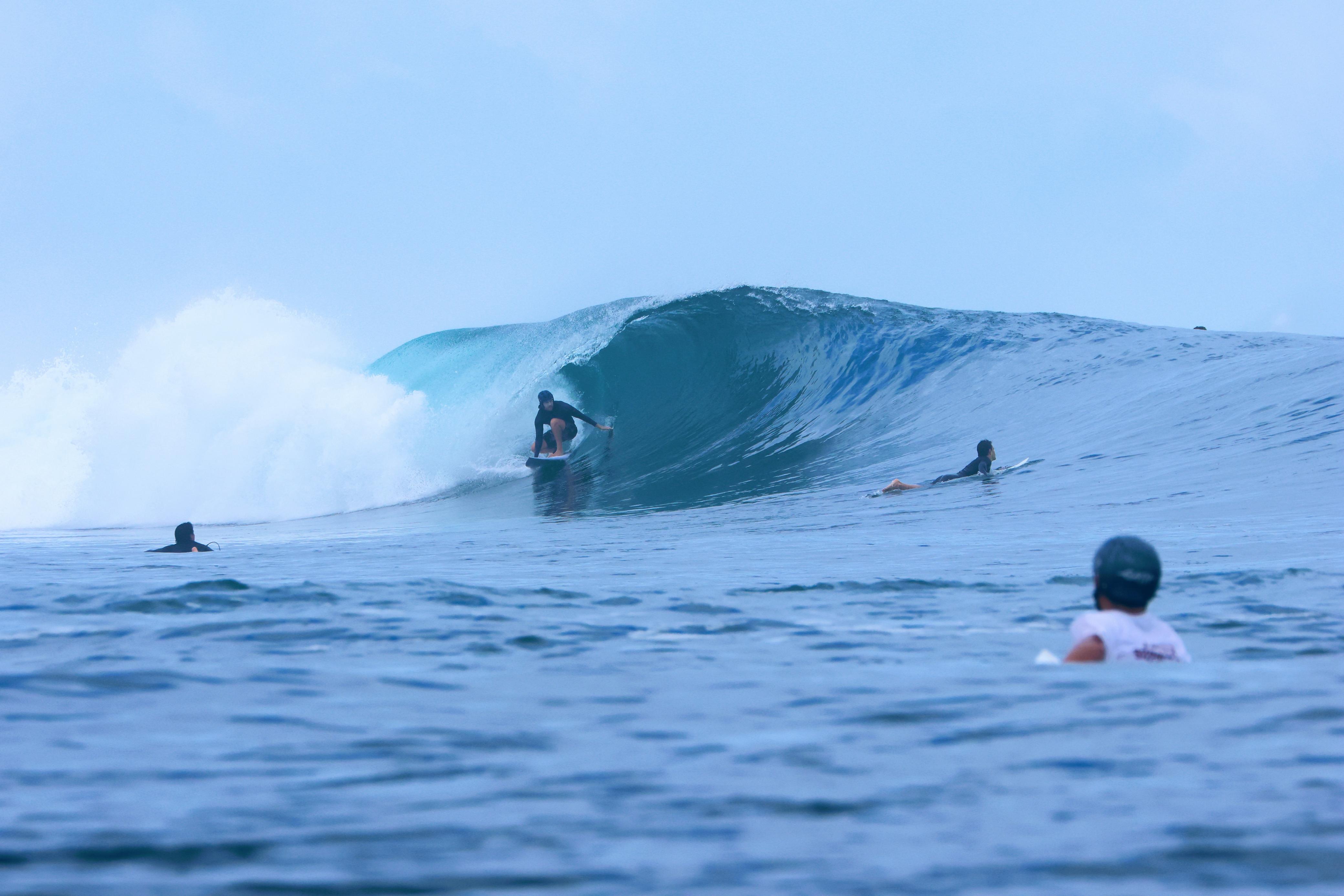
The softer waves nearby
These aren't G-Land. They're separate waves further into the bay, and half the internet lists them as sections, which is how people end up disappointed. They're worth knowing about anyway, because they're where you go when the point is maxing out or when your group doesn't all surf the same.
Getting there is easier than it looks on a map. The camps run trucks down, and it's a ten minute drive. You can walk it in 30 to 45 minutes along the beach if you'd rather, and plenty of people do, but you'll be carrying a board both ways and the return leg comes after a surf. Take the truck.
One rule covers all three: mid to high tide, no exceptions. The waves are softer than the point. The reef isn't. Surf these on a low tide and you'll get hurt, and you'll be a long way from help when it happens.
Chickens
Deeper in the bay where the swell loses its power. The friendliest of the lot.
- A fair shout for stronger intermediates not ready for the pits up the point
- Mid to high tide only. It's rocky and reefy the moment the water drops
20/20s
Only wakes up on bigger swells.
- A rippable left and a right that shows up when it feels like it
- Fun rather than serious
- Mid to high tide, same as the rest of the bay
Tiger Tracks
Over soft sponge reef rather than the sharp stuff.
- A left and a right, picking up nearly the same swell as the point
- Soft reef doesn't mean deep reef. It dries from mid tide down, so go on the high
- Where mixed-ability groups end up when the main points are maxing out
Ready to Surf in Bali? Secure Your Spot Now!
When is the best time to surf G-Land?
Snapshot: Dry season (April to October) is the window. Peak surf lands June to September. The wet season is patchy and unreliable.
The dry season is when the south swells arrive and the southeast trades blow offshore. June to September is when both are most reliable, and it's also when everyone else knows it.
Here's the bit worth thinking about. Peak season lineups get packed, and G-Land is one wave with five sections and a camp full of people who all paid to be there. Our call is April or October. You're on the edge of the season rather than the middle of it, so the odds drop a little, but the lineup thins out a lot. A slightly smaller day with space to move beats a perfect one where you're fighting for a wave.
The wet season from November to March isn't dead, but consistency goes out the window and the winds are unreliable. You won't be guaranteed to score G-Land in its prime this time of year.
So if you're picking dates around it, build your trip around the same dry season logic that governs Bali's Bukit. We break it all down in our Bali surf seasons guide if you want the month-by-month picture.
What level do you need to surf G-Land?
Snapshot: An advanced reef wave. Size up your boards, bring booties, and be honest about your reef hours before you book.
Let's not sugarcoat it: G-Land is an advanced wave. Powerful, hollow and breaking over sharp, shallow coral. You'll need to be a decent level (and somewhat fearless).
The wave asks for two things from everyone.
First, size up. G-Land is heavy and fast, and it pays dividends to be in early. Whatever you'd ride at home, go bigger. A performance shortboard covers Money Trees and Launching Pads, and you want a step-up for the bigger Speedies days. People who bring their Bali quiver spend the week under-gunned and behind the wave.
Second, booties. Not optional on the shallow lows, and you'll be walking over reef to get in and out.
Then there's the big swell kit. Once it's pushing 8 foot and over, we'd recommend a helmet and either a thick neoprene vest or a proper impact vest. That's not us being cautious for the sake of it. We've seen all three out there on the bigger days, worn by people who know exactly what the reef does to you. Speedies is where most of the serious injuries at G-Land happen, and it's shallow when it's big.
The rest of the kit list, spares, first aid, what the camps actually stock, is in our G-Land travel guide.
If you're still finding your feet on reef that's completely fine. It just means G-Land is the goal, not the starting point. The honest move is to get your reef hours up somewhere more forgiving first. The breaks around Uluwatu are perfect for exactly that, with options for a range of abilities and plenty of room to build the skills G-Land demands.
Have a gander at where you sit as a surfer and work backwards from there.
Frequently asked questions about G-Land
Q. Is G-Land good for beginners?
Short answer, hell no. The main sections break fast and hollow over shallow coral, and they're firmly advanced territory. There are softer waves deeper in the bay like Chickens and Tiger Tracks that suit improving intermediates, and the camps run trucks down to them. But they're a reason to enjoy your trip, not a reason to book it. If you're still learning, G-Land is a goal to work toward, not a place to start.
Q. Do the sections link up?
Rarely, and this is the thing most people get wrong. The point is over a kilometre of rideable reef, but the sections don't connect on most days. You pick one, you surf it, you paddle back. Rides are usually 300 to 400 metres, which is still one of the longest waves you'll ever ride. Just don't turn up expecting to surf the whole point in one go.
Q. Are Chickens, 20/20s and Tiger Tracks part of G-Land?
No, though half the internet lists them as sections. They're separate waves further into the bay. G-Land itself is five sections: the Bombie, Kongs, Money Trees, Launching Pads and Speedies. Worth knowing before you book a trip on the basis of a spot guide that lumps them together.
Q. Which section should I surf first?
Kongs, almost always. It's the mellowest of the five, it's the first on the point to pick up swell, and it's a fair place to work out what the reef is doing before you paddle down the point.
Q. How do you get to G-Land from Bali?
Fast boat, in about two to two and a half hours, and it's usually bundled into your camp package. Overland exists but almost nobody does it anymore. We've covered the whole thing, including the boat schedule and what it costs, in our G-Land travel guide.
Q. What boards should I bring?
Bigger than you think. A performance shortboard and a step-up for the bigger days, and plenty of surfers pack a semi-gun for the heaviest swells. The mistake is bringing your Bali quiver and spending the week behind the wave.
Q. Is G-Land dangerous?
Yep. It demands respect. The reef is sharp and shallow, the current is strong. It tends to push you down the point away from the takeoff, so bring yo paddlin' arms. There are sea urchins, and the location is remote with limited medical help, so a proper first aid kit isn't optional. Indonesia carries a small malaria risk, so chat to a doctor before you go. So yes… it is dangerous.
The bottom line
G-Land is one of the great waves of the world. It's also one of the most demanding. Know the sections, respect the season and be honest about your level, and one day that boat ride from Bali could have your name on it.
Until then, the building blocks are waiting a little closer to home.
More blogs you might like
FAQs
Find answers to your last-minute questions about your upcoming surf adventure with us.
Our packages include accommodation, daily surf lessons, and access to all camp facilities. We also provide surf gear for your convenience. Additional activities can be booked separately.
Travel insurance is highly recommended to cover any unexpected events. It can protect you against cancellations, medical emergencies, and lost belongings. Please check with your provider for specific coverage.
Booking is simple! Visit our Packages & Prices page to select your desired package. You can complete your reservation online or contact us for assistance.
Kala Surf Camp is located in the heart of Bali, close to the best surf spots. Our camp offers a peaceful environment while being just a short distance from vibrant local culture. You'll enjoy easy access to both surf and relaxation.
Yes, date changes can be made depending on availability. Please contact our support team as soon as possible to discuss your options. We aim to accommodate your needs whenever we can.