


The Ultimate G-Land Travel Guide: How to Get There, What to Pack and Surf Camps

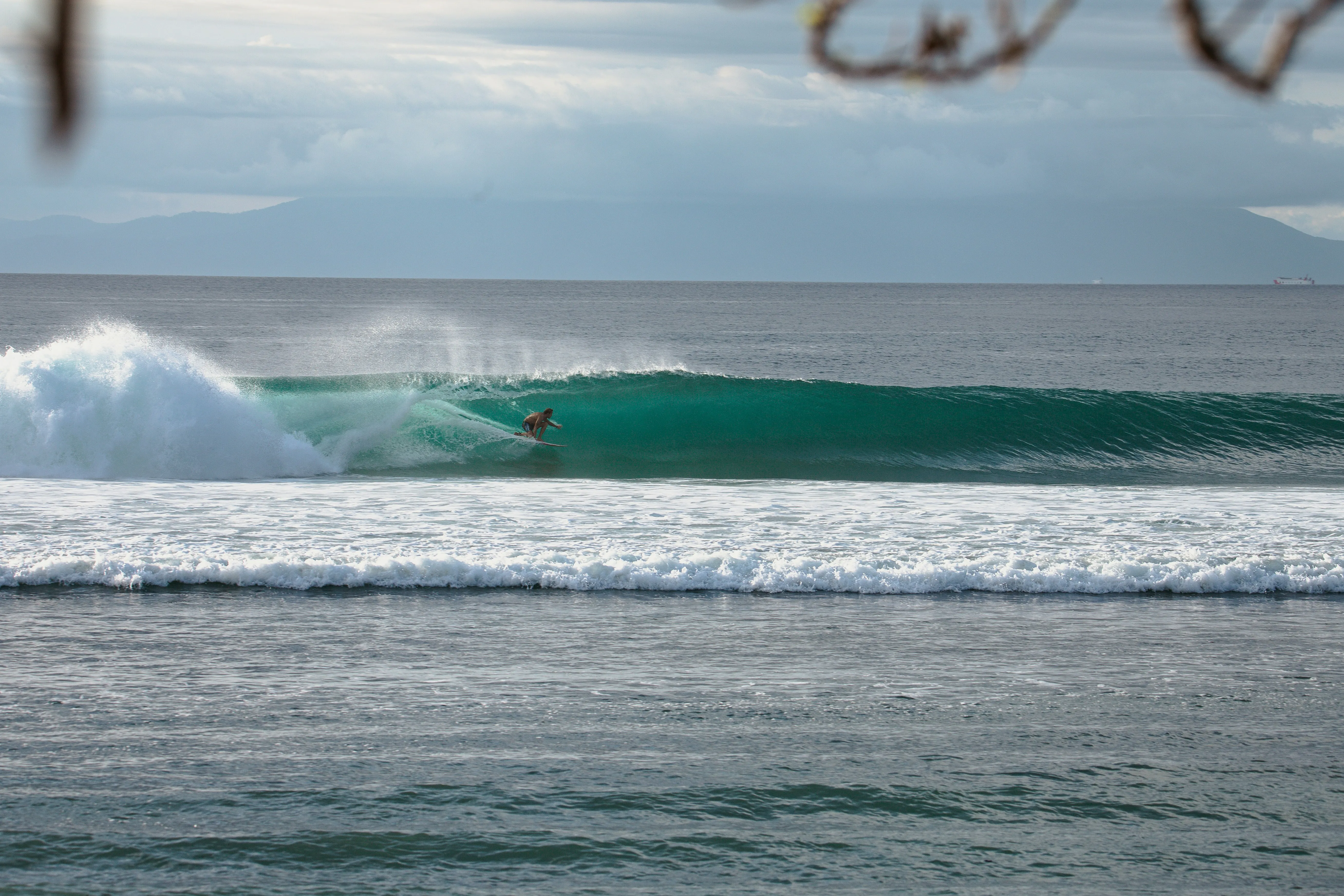
So you've got G Land in your sights. Good call. Great call even.
It's one of the most epic surf adventures on earth. A perfect left in the jungle on the far eastern tip of Java, a long way from anywhere, and the journey to get there is half the story.
But it's also remote. A little wild. Not the kind of trip you wing at the last minute. There are no ATMs. The jungle (or more accurately the monkeys and the ants) have opinions about your snacks. Deer and wild boar cross the track like they own the place, because they do. This was tiger country once, within living memory. And the wave doesn't care how far you travelled.
Here's the practical guide.
How to get there, what to throw in your bag and how the camp setup actually works. We'll keep it straight, like we always do.
First things first: G-Land isn't in Bali
Worth clearing up early.
Despite the way it gets talked about, G Land doesn't sit in Bali at all. It's in Grajagan Bay in Banyuwangi, on the far eastern tip of Java, tucked inside Alas Purwo National Park.
That's where the name comes from, by the way. G for Grajagan. Not quite the mystery some people expect.
Alas Purwo matters more than it sounds. It's a protected national park, which is the reason there's no town, no development and no road worth the name. The wave is inside a nature reserve. That's why the trip is what it is, and why it stays that way.
It also means you pay to get in. Foreign visitors are charged 200,000 rupiah per person per day at the Plengkung gate, weekday or weekend.
The reason people lump it in with Bali is simple. Almost everyone starts their trip from Bali and crosses over. So when surfers say they're "going to G-Land from Bali", they mean Bali is the launchpad, not the final stop.
How to get to G-Land from Bali
You've got two real options, plus a third we'd talk you out of.
Speedboat. This is how almost everyone gets there now. It leaves a Bali beach early and runs straight across to G Land in roughly two to two and a half hours. You're often surfing the same day. The cost is factored into your camp package, so it's rarely a separate decision. It's weather dependent, and rough seas can cancel a crossing.
Overland. A minibus picks you up from the Kuta or Canggu area, usually in the evening. Three hours to Gilimanuk Harbour, a public ferry across the Bali Strait to Ketapang in Java, then another minibus south through Alas Purwo to the bay. Six to seven hours all up, sometimes more, depending on what the ferry queue decides to do. It's cheaper and it's scenic, but honestly, you don't really see people doing it anymore. Your boards might, though. Most camps still truck boards over while the guests fly across the water.
Driving yourself. Google Maps will happily show you a route from Uluwatu to G Land. We highly, highly do not recommend it. The road into the national park is gravel, it's a long way from anywhere useful, and you'd be doing it with boards on the roof for no reason. The boat exists. Take the boat.
The bit nobody tells you: the boat runs twice a week
Camps typically run two boats in and two boats out per week. That's it. Which means your trip length isn't really a preference, it's a timetable. You arrive on a boat and you leave on a boat, and the days in between are yours whether the swell shows up or not.
If something goes genuinely wrong, you're not stranded. You can usually buy a seat on another camp's boat for somewhere between 100 and 300 USD. We've had a guest do exactly that after an allergic reaction, back in Bali the same day. But it costs, and it depends on someone else's boat running.
Plan your trip around the schedule (which you can check online), not the other way round.
The nearest airport on the Java side is Banyuwangi (BWX), but most surfers still route through Bali because that's where the camp transfers and boat schedules are set up.
What to pack for G-Land
This is where a bit of planning saves your trip.
G Land is remote, so the stuff you'd grab without thinking in Bali isn't sitting around the corner here. There are no surf shops in the jungle. No Billabong outlet stores off the main road (because there isn't one!). BGS and the camps do sell wax, booties and leashes, but you're rolling the dice on what's in stock the week you're there. Treat it as a last resort, not a plan.
Boards. Bring bigger boards. We can't stress this enough. G Land is a heavy, fast wave and it pays dividends to be in early, so whatever you'd ride at home, size up. A performance shortboard covers the everyday sections, a step-up handles the bigger Speedies days, and a semi-gun means you're ready when it's properly firing rather than watching from the deck.
Worth knowing: your boards probably aren't coming on the boat with you. Most camps truck them overland while the guests fly across the water, so confirm the arrangement with your camp before you fly, and don't pack anything in the board bag you'll want on day one.
Reef and safety gear. Booties are close to essential on the shallow lows. Buy the fold up kind, and bring a rash guard with a back zip so you can stash them in there once you're out. Sounds like a small thing. It isn't.
First aid. Bring more than you think you need. Pain meds, reef cut supplies, and antihistamines in case of an allergic reaction. You are a long way from the nearest hospital, and that stops being an abstract fact very quickly.
Spares. Extra leashes, fins, a fin key, a few longer leashes for the bigger days and more wax than you think you need.
Money. The camps take cards now, with a fee, and local transfer works too if you've got something like a Permata account. So you won't be stuck if you turn up empty handed. Cash is still simpler for the small stuff.
Everything else. Mosquito repellent and long sleeves for mornings and evenings, plus a chat with your doctor about antimalarials before you go. Waterproof bags for the boat and a power bank. Oh, and travel insurance. Essential.
Ready to Surf in Bali? Secure Your Spot Now!
How the surf camps work
There's no town at G Land. The accommodation is a handful of surf camps clustered along the point, ranging from basic bamboo style lodging through to glamping tents and bungalows with AC and hot showers.
Almost everything runs on packages. A typical deal bundles your boat transfer from Bali, a room, meals and your time in the water, and it's sold in three or six night blocks. That all inclusive model exists because of how isolated the place is. You can't just rock up and find a warung and a guesthouse. It's also why the boat schedule shapes your trip more than your preferences do.
There are three camps on the point. Here's how we'd rank them.
1. Jawa Jiwa G-Land Surf Camp & Luxury Glamping
Arguably the best food and the best accommodation on the point, and the new glamping tents are a real step up from anything else out there. BGS, our favourite coffee shop at G Land, is right next door. If you want the trip to be comfortable as well as good, stay here. Map
2. G-Land Joyo's Surf Camp
Rooms and food are okay rather than memorable, but Joyo's has two things going for it. The lodge got Starlink in 2026 and it's been consistent enough to take work meetings on, which matters if you're stretching a trip around work. It's also right next to the boats, the shortest walk of any camp on the point. Map
3. G-Land Jack's Surf Camp
The cheapest of the three, and the trade offs follow from that. It's the longest walk to the boats. But it's the shortest walk to the breaks when the tide drops and you need to get down the point, which is worth more than it sounds at 5am. Map
A few things are worth knowing before you commit.
Peak season from around April to September books out, so lock in early. Check the cancellation terms, since many camps charge escalating fees the closer you get to your date. And confirm exactly what your package covers, because board transport, park fees and extras vary between operators.
A quick reality check before you book
G Land is an advanced wave. Sharp reef, strong currents that drag you down the point and barrels that don't forgive errors. The travel guide above gets you there, but it can't rev you up when the wave of the day marches your way and you absolutely have. To. Go.
That's the main point. It isn't the whole bay.
Deeper in, past the harbour, the reef gets more forgiving. Chickens and 20/20 sit twenty minutes or so down the beach. Further round is Tiger Tracks, a left and a right breaking over soft sponge reef, and it's been getting a lot more popular. It picks up nearly the same swell as the main point without any of the menace. The reef dries out from mid tide down, so go on the high.
If you're still building toward reef break confidence, there's no shame in that. Get your hours up somewhere more forgiving first. The breaks around Uluwatu are ideal for exactly that, with room for a range of abilities. And it's worth being properly honest about where you sit as a surfer before you commit to the jungle.

Frequently asked questions about travelling to G-Land
Q. How much does a G-Land trip cost?
More than most people expect, and the camps price by nights rather than weeks. At the time of writing, the cheapest bed on the point is around 550 USD for three nights or 850 USD for six. Mid range bungalows run 650 to 750 for three nights, 900 to 1,000 for six. Joyo's tops out around 1,145 for six nights in their VIP package. Jawa Jiwa doesn't publish rates, which tells you roughly where it sits. All of these include your boat from Bali, your room and three meals a day. None of them include the national park fee.
Q. Do I have to pay the national park fee?
Yes, and most camps don't include it. Foreign visitors pay 200,000 rupiah per person per day at the Plengkung gate. Over six nights that's about 1.2 million rupiah, or roughly 75 USD on top of your package. Worth building into the budget rather than discovering on arrival.
Q. How many days should I go for?
Three or six nights, because that's what the boats do. Camps run two boats in and two out each week, so your trip length is really a timetable rather than a preference. Six nights is the proper trip and gives the swell room to move. Three nights works if you're tight, but you're leaning harder on luck.
Q. Is it safe? What about the malaria thing?
Indonesia carries a small malaria risk and G Land is remote, so talk to your doctor before you travel rather than reading a blog about it. Mosquitoes are barely noticeable in the dry months and more present when it rains. Most rooms have nets, and repellent plus long sleeves at dawn and dusk handles the rest. The bigger safety point isn't disease, it's distance. You're a long way from a hospital, which is why we bang on about the first aid kit.
Q. Can I get money out there?
There are no ATMs, but the camps take cards now with a fee, and local transfer works if you've got an Indonesian account. Bring some cash anyway for laundry, ding repairs and odds and ends. It's simpler than it is essential.
Q. Is there wifi? Can I work from there?
Better than you'd think. Joyo's got Starlink in 2026 and it's been consistent enough to take meetings on. Jack's has wifi too. It's not the off grid jungle experience it was ten years ago, for better or worse.
Q. When does it actually work?
The dry season, roughly April to October, with the most consistent surf between June and September. That's when the south swells are strongest and the offshore trades groom the wave clean. The wet season can still throw the odd wave but conditions get unreliable. Probably not worth the effort, in our opinion.
The bottom line
Getting to G Land is straightforward once you accept there's really only one way to do it. Take the boat. It's two hours instead of seven, it's already in your package, and the timetable picks your dates anyway.
Pack like the place is remote, because it is. Book your camp ahead and read the fine print. For wider context before you go, the Wikipedia entry on G-Land covers more of the geography and history.
Do all that and the only thing left to worry about is the wave itself. Which, without freaking you out, is plenty.
More blogs you might like
FAQs
Find answers to your last-minute questions about your upcoming surf adventure with us.
Our packages include accommodation, daily surf lessons, and access to all camp facilities. We also provide surf gear for your convenience. Additional activities can be booked separately.
Travel insurance is highly recommended to cover any unexpected events. It can protect you against cancellations, medical emergencies, and lost belongings. Please check with your provider for specific coverage.
Booking is simple! Visit our Packages & Prices page to select your desired package. You can complete your reservation online or contact us for assistance.
Kala Surf Camp is located in the heart of Bali, close to the best surf spots. Our camp offers a peaceful environment while being just a short distance from vibrant local culture. You'll enjoy easy access to both surf and relaxation.
Yes, date changes can be made depending on availability. Please contact our support team as soon as possible to discuss your options. We aim to accommodate your needs whenever we can.